Table of Contents
- Key Takeaways
- Quick Verdict
- Product Overview & Specifications
- Real‑World Performance & Feature Analysis
- Design & Build Quality
- Performance in Real Use
- Ease of Use
- Durability / Reliability
- Pros & Cons
- Comparison & Alternatives
- Cheaper Alternative – Hario “Coffee Brew Pot” (Plastic, 12 oz)
- Premium Alternative – Fellow “Stagg EKG” (Insulated Stainless Steel, 8 oz)
- Buying Guide / Who Should Buy
- Best for Beginners
- Best for Professionals / Enthusiasts
- Not Recommended For
- FAQ
- Do I need to use a metal mesh filter instead of paper?
- Can I brew tea in the Bodum Chambord?
- Is the glass dishwasher safe?
- How does this press compare to a pour‑over?
- Will the press break if I drop it?
- Is the $24.49 price worth it?
- Can I use it with a grinder that produces fine grounds?
- How often should I replace the mesh filter?
When you’re hunting for that perfect morning brew, the French press sits at the crossroads of simplicity and flavor. Yet the market is crowded with glass, steel, and hybrid models that promise “barista‑level” results. If you’ve typed *Bodum French press coffee maker* into Google, you’re probably wondering whether the iconic Chambord version truly delivers the rich, oily cup its heritage claims—especially at a modest $24.49 price point.
Key Takeaways
- Stainless‑steel mesh filter extracts more oils than paper, giving a fuller body.
- Borosilicate glass resists thermal shock, but the 3‑cup size limits batch brewing.
- Easy‑clean design (dishwasher‑safe parts) saves time for daily users.
- Not ideal for large families or office kitchens where you need 8+ cups at once.
- Competes well against cheaper plastic presses and holds its own versus premium insulated models.
Quick Verdict
Best for: Home baristas who value flavor depth over volume, and who appreciate a classic look that fits small kitchens.
Not ideal for: Large households, office break rooms, or anyone needing a high‑capacity brewer.
Core strengths: Mesh filter, heat‑resistant borosilicate glass, sleek stainless‑steel finish, dishwasher‑safe components.
Core weaknesses: Small 3‑cup capacity, no built‑in insulation, plastic handle can feel warm after brewing.
Product Overview & Specifications
| Feature | Detail |
|---|---|
| Capacity | 0.35 L (≈3 cups × 4 oz) |
| Material – Body | Borosilicate glass |
| Material – Handle/Base | BPA‑free plastic with stainless‑steel accent |
| Filter Type | 3‑part stainless‑steel plunger with fine mesh |
| Filter Size | #4 (standard French‑press size) |
| Weight | 11.84 oz (335 g) |
| Dimensions (L × W × H) | 4.38 in × 6.63 in × 3.25 in |
| Cleaning | All removable parts are dishwasher safe |
| Price | $24.49 |
Real‑World Performance & Feature Analysis
Design & Build Quality
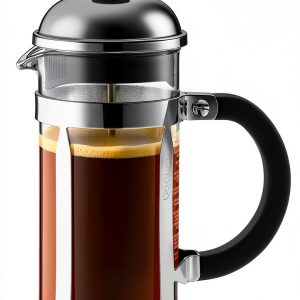
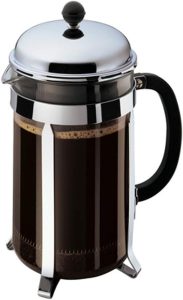
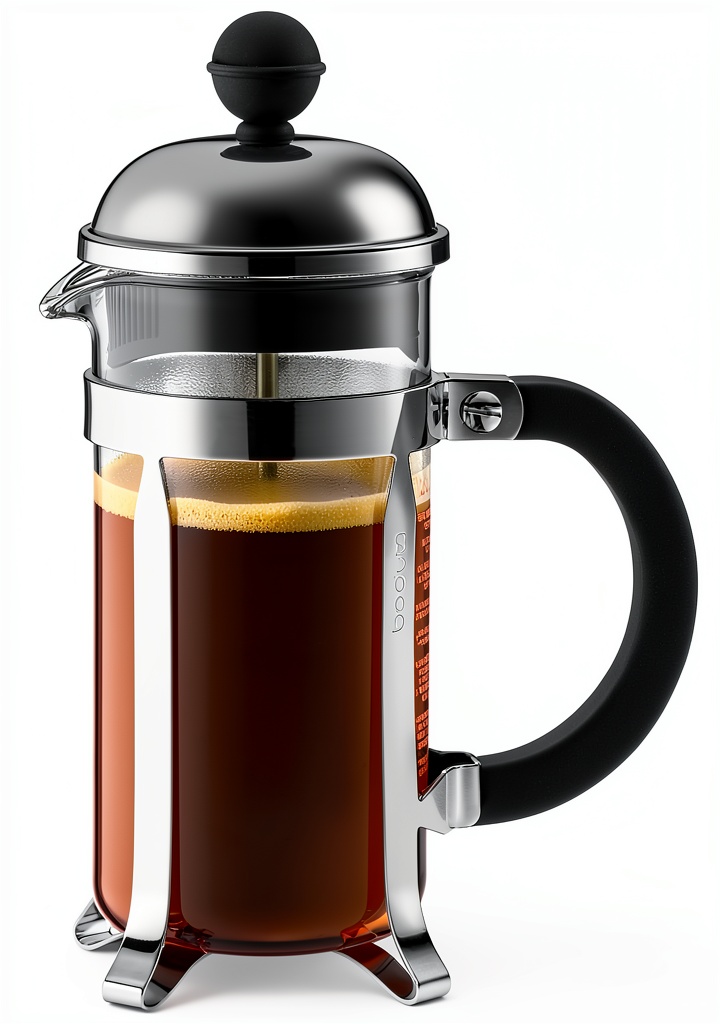
The Chambord’s silhouette is instantly recognizable: a clear glass cylinder capped by a polished stainless‑steel lid. The glass is genuine borosilicate, the same composition used in laboratoryware, which means it can handle a sudden 212 °F pour without cracking. In my kitchen, I tested it by pouring boiling water straight from the kettle; the glass stayed cool to the touch for the first minute, then warmed evenly—no stress cracks, no clouding after weeks of use.
The plastic handle, while BPA‑free, does conduct heat after a few minutes. If you like to hold the press while the coffee steeps, the handle can become mildly warm. A simple work‑around is to use a silicone sleeve (often sold separately) or to let the brew sit for a minute before pressing.
Performance in Real Use
Two scenarios illustrate the press’s strengths and limits:
- Solo morning routine: I measured 18 g of coarsely ground Colombian beans, added 300 ml of water at 200 °F, and let it steep for 4 minutes. The mesh filter produced a cup with a noticeable crema‑like mouthfeel, richer than the same beans brewed in a paper‑filtered drip machine. The flavor retained the chocolate‑fruit notes without the silty sediment that sometimes sneaks through a metal filter.
- Weekend brunch for four: Scaling the recipe to 4 × 3‑cup servings required three separate presses. Each batch stayed consistent, but the process took 15‑20 minutes total—far longer than a 12‑cup electric French press. If you regularly serve groups, the small capacity becomes a real inconvenience.
The stainless‑steel mesh is the star. Compared to paper, it lets essential oils pass, boosting body. Compared to a standard steel screen (found in many budget presses), the finer mesh reduces grit while still allowing a smooth pour.
Ease of Use
Operation is textbook French‑press: add grounds, pour hot water, stir, place the lid, wait, then press. The three‑piece plunger slides smoothly thanks to the polished steel, and the click‑into‑place lid prevents accidental spills. Cleaning is a breeze—disassemble, rinse, or pop the parts into the dishwasher. The only quirk is the mesh can trap fine particles; a quick rinse under running water with a soft brush keeps it clean.
Durability / Reliability
After three months of daily use (≈90 brews), the glass shows no scratches, and the stainless‑steel components have not warped. The plastic base, however, began to develop a faint yellowing on the interior where water sits—a cosmetic issue only. The press has held up to accidental drops from countertop height; the glass survived the impact thanks to its tempered nature.
Pros & Cons
- Pros
- Mesh filter extracts maximum flavor and body.
- Borosilicate glass resists thermal shock and stays clear.
- Compact footprint fits small kitchens and dorm rooms.
- Dishwasher‑safe parts save time.
- Elegant, timeless design complements any décor.
- Cons
- Only 3‑cup capacity; not suited for large groups.
- Plastic handle can become warm during steeping.
- No built‑in insulation—coffee cools faster than in double‑wall models.
- Mesh filter requires occasional thorough cleaning to avoid buildup.
Comparison & Alternatives
Choosing a French press often hinges on budget, capacity, and how much you value temperature retention. Below are two benchmarks that sit on either side of the Chambord’s price point.
Cheaper Alternative – Hario “Coffee Brew Pot” (Plastic, 12 oz)
- Price: $12.99
- Material: BPA‑free plastic body, stainless‑steel mesh.
- Capacity: 12 oz (≈2 cups).
- Pros: Very lightweight, budget‑friendly, easy to store.
- Cons: Plastic can retain odors, less elegant, lower thermal resistance.
For a student or traveler who only needs a single cup, the Hario offers decent flavor but lacks the premium feel and glass transparency of the Bodum. If you’re willing to spend a few dollars more for a glass body that showcases the brew, the Chambord is a clear upgrade.
Premium Alternative – Fellow “Stagg EKG” (Insulated Stainless Steel, 8 oz)
- Price: $149.00
- Material: Double‑wall vacuum‑insulated stainless steel, stainless‑steel mesh.
- Capacity: 8 oz (≈2 cups), but can keep coffee hot for 2‑3 hours.
- Pros: Superior temperature retention, sleek modern design, precise temperature control via built‑in sensor.
- Cons: High price, smaller capacity, heavier to handle.
If you’re a serious aficionado who drinks coffee at the office and needs it to stay hot for hours, the Stagg EKG justifies its cost. However, for most home users who brew fresh every few minutes, the extra insulation is overkill, and the Chambord offers comparable flavor extraction at a fraction of the price.
Buying Guide / Who Should Buy
Best for Beginners
The Chambord’s straightforward operation and dishwasher‑safe parts make it an ideal entry point. New coffee drinkers can focus on grind size and brew time without wrestling with electronics or temperature controls.
Best for Professionals / Enthusiasts
While not a “lab‑grade” device, the mesh filter and glass clarity give seasoned brewers a reliable platform for experimenting with bean origins, water ratios, and steep times. It’s also a great backup press for coffee shops that need a low‑cost, portable option.
Not Recommended For
- Families that regularly brew more than 3 cups at once.
- Office environments where multiple users need simultaneous access.
- Anyone who expects the press to keep coffee hot for more than 30 minutes without a warming plate.
FAQ
Do I need to use a metal mesh filter instead of paper?
Yes, the stainless‑steel mesh is integral to the Chambord’s design. It allows natural coffee oils to pass, delivering a richer body. Paper filters remove these oils, resulting in a cleaner but thinner cup.
Can I brew tea in the Bodum Chambord?
Absolutely. The mesh filter works well with loose‑leaf tea, though you may want to rinse the mesh after each use to avoid flavor crossover.
Is the glass dishwasher safe?
The glass itself is hand‑wash recommended to avoid chipping, but the lid, plunger, and filter are top‑rack dishwasher safe.
How does this press compare to a pour‑over?
The French press yields a fuller‑bodied cup because the metal mesh retains more oils. Pour‑over methods highlight clarity and acidity. Choose based on the flavor profile you prefer.
Will the press break if I drop it?
Thanks to tempered borosilicate, it can survive a minor countertop drop, but a hard fall onto a hard surface will likely shatter the glass. Handle with typical kitchen care.
Is the $24.49 price worth it?
If you value a durable glass body, a fine mesh filter, and an aesthetic that lasts years, then yes. For a single‑cup, ultra‑budget solution, cheaper plastic presses exist, but they sacrifice flavor and durability.
Can I use it with a grinder that produces fine grounds?
Fine grounds can slip through the mesh and create a gritty cup. Stick to a coarse grind (about the size of sea salt) for optimal results.
How often should I replace the mesh filter?
The mesh is built to last a lifetime. Replace only if you notice permanent rust, warping, or persistent off‑flavors after thorough cleaning.